Overview
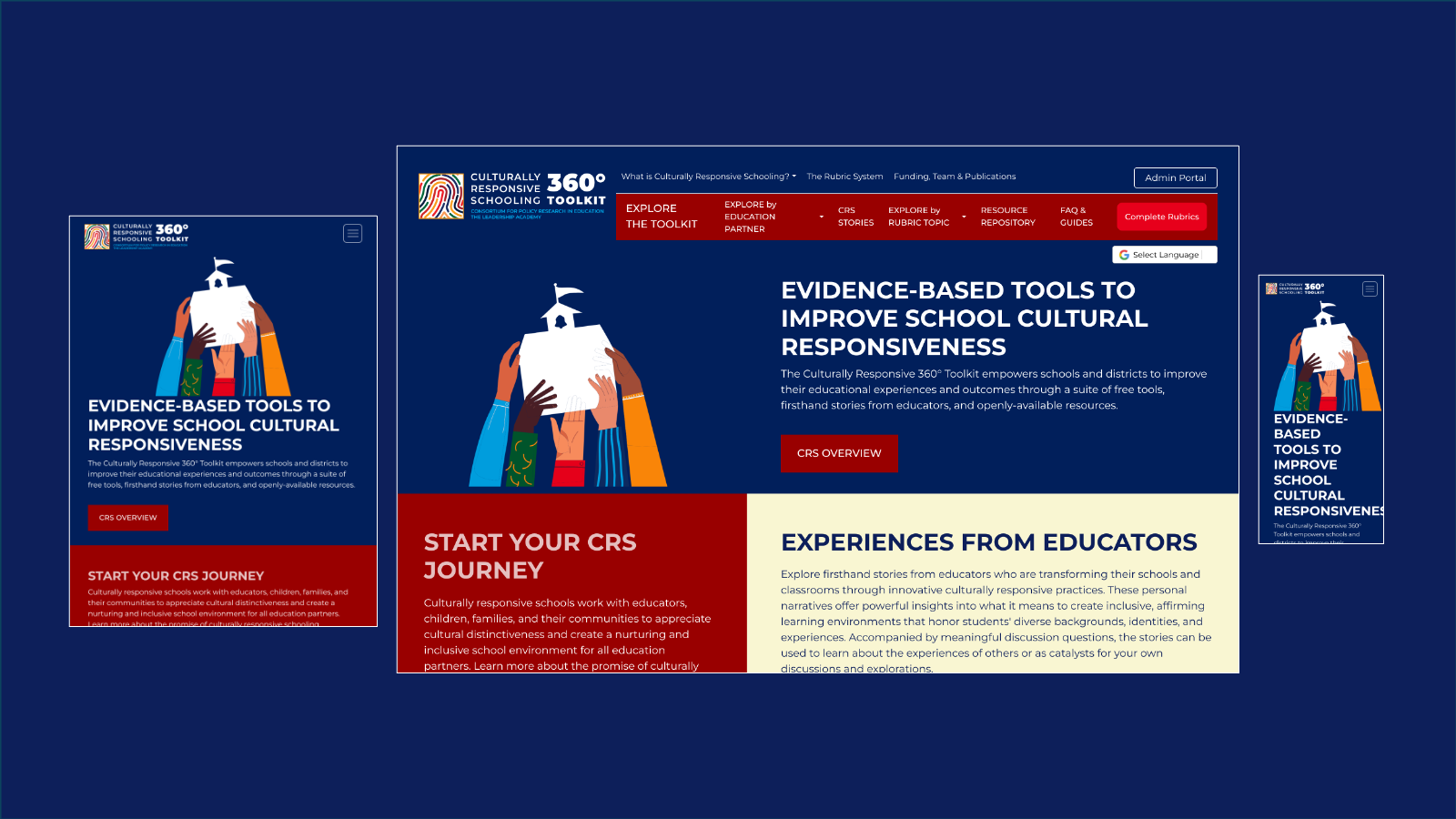
The CRS 360° Toolkit is a digital platform designed to help educators implement culturally responsive schooling (CRS) practices through actionable tools, self-assessment frameworks, and real-world examples.
My Role: As lead designer & communications strategist, I led the end-to-end design and content strategy for the platform—transforming complex academic research into an intuitive, user-centered digital experience.
Duties included: UX strategy & information architecture, content strategy & narrative design (Stories, Explainer Video, Practitioner & Rubric Topic pages), visual design & brand system (project logo, Penn branding, design system), stakeholder collaboration (researchers, educators, partners), and product development from concept to launch.
The Problem
The Consortium for Policy Research in Education (CPRE) and The Leadership Academy needed a way to translate the research and principles of culturally responsive schooling (CRS) found through their study (Institute of Education Sciences, U.S. Department of Education, Grant R305T210087) into a practical, accessible, and actionable digital resource for educators, school leaders, and school districts.
Despite growing emphasis on equity in education, educators faced critical challenges, for example:
– Research on culturally responsive practices is fragmented and very academic
– Implementation guidance is often abstract or inaccessible
– Schools lack tools for measuring progress over time
– Professional development is typically one-time, not sustained over time
Goal
Create a tool that bridges research and practice in a way that is usable, scalable, and grounded in real educator workflows.
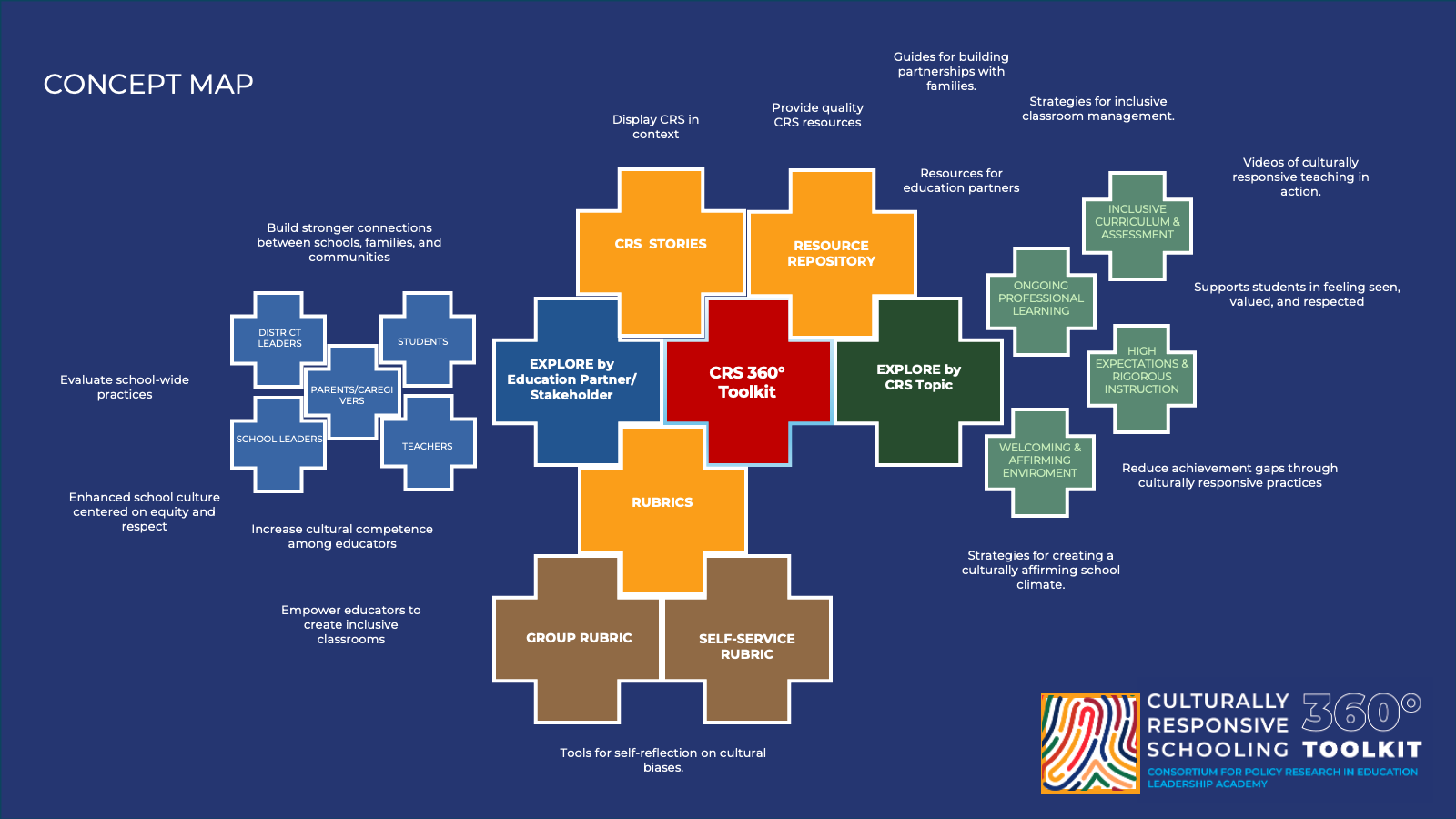
To achieve this we looked towards incorporating the following into our project site: translate CRS research into clear, actionable guidance, support ongoing reflection and continuous improvement, provide tools for self-assessment and team alignment, elevate educator voice and lived experience, and create a shared framework across roles (teachers, leaders, systems).
Process
1. Research Translation
– Synthesized dense academic research into core domains and principles
– Identified what is actionable vs. conceptual
(Teams: Research & Development, Project Management, and Graduate Assistants)
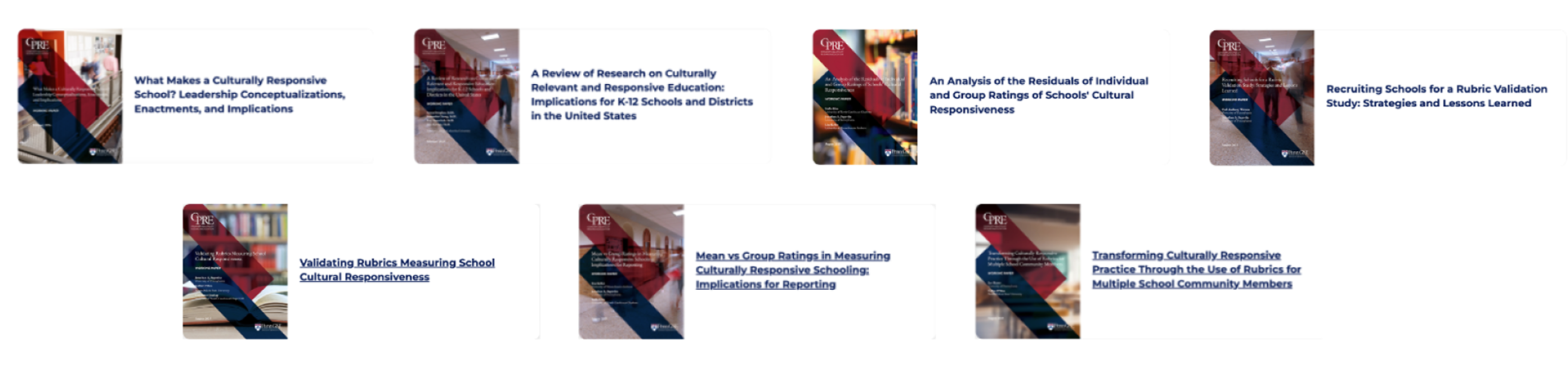
Read our CRS working papers at: https://crs360toolkit.org/funding-team-publications
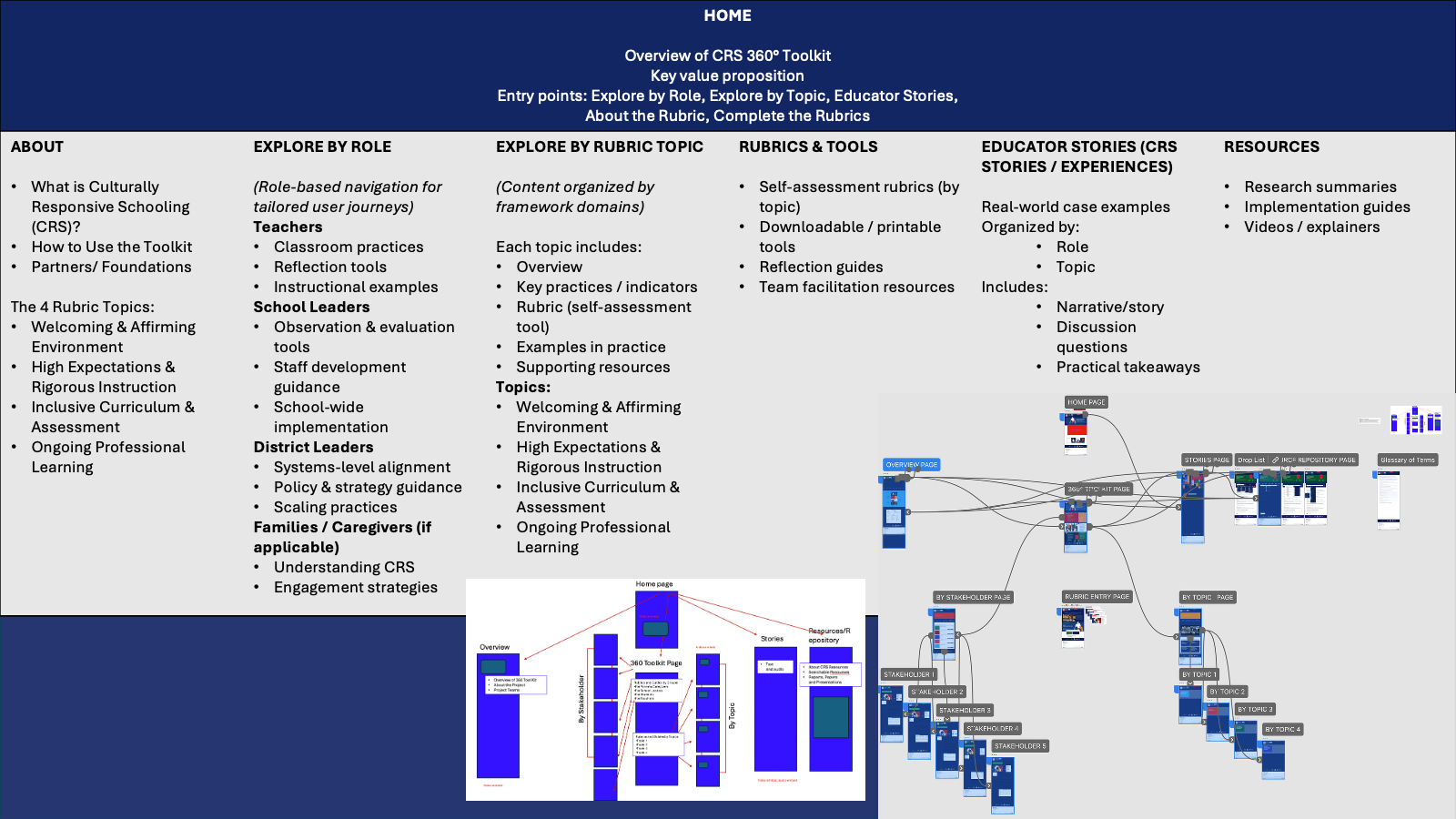
2. Information Architecture
– Designed a structure that moves from understanding → application → reflection:
– Framework overview
– Domain-based navigation
– Rubrics and indicators
– Educator stories and examples
Focus: reduce cognitive overload while maintaining depth (add audio or video breaks)
(Teams: Communications, Website)
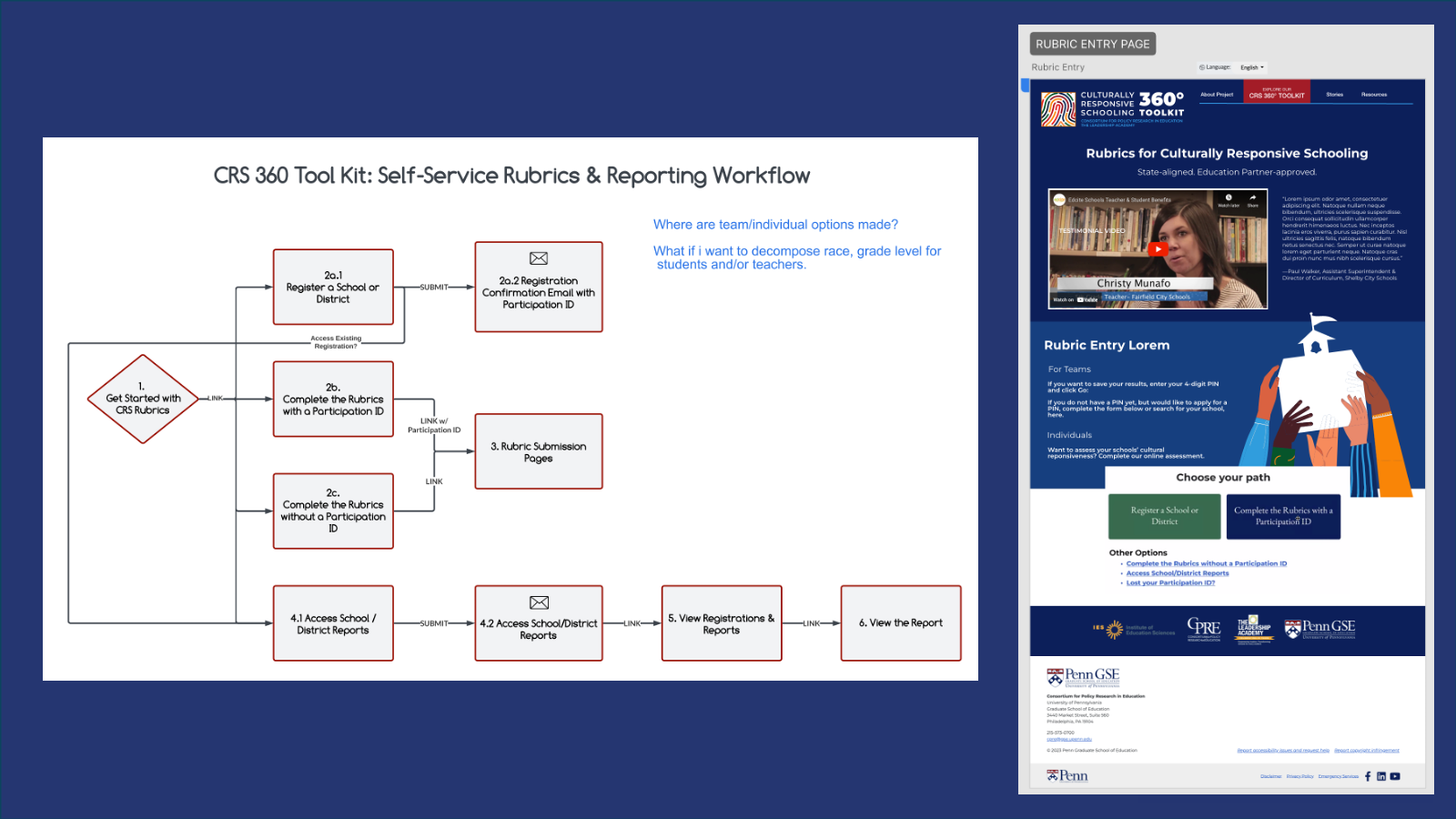
YouTube Explainer videos & CRS Stories
Discovery & Goal Setting
– Define purpose, audience, and key message
– Align with broader communication or product goals
Research & Content Development
– Gather source material, data, and subject matter insights
– Simplify complex concepts into clear, digestible ideas
Scriptwriting
– Craft concise, engaging narrative (often 60–90 seconds)
– Balance clarity, tone, and storytelling flow
Storyboarding
– Map visuals to script line-by-line
– Plan scenes, transitions, and pacing
Visual Design
– Create style frames (color, typography, illustration style)
– Design assets, icons, characters, and data visuals
Voiceover Production
– Cast/select voice talent or record in-house
– Direct tone, pacing, and pronunciation
YouTube Explainer Video
CRS Stories
CRS Stories was developed as a narrative-driven content layer within the CRS 360° Toolkit to translate culturally responsive schooling from abstract frameworks into lived, relatable experiences. The strategy centers educator voices to support reflection, validation, and are case examples that show how culturally responsive schooling looks in practice across real classrooms and schools.
CRS Stories are grounded in the four CRS rubric areas:
– Welcoming & Affirming Environment
– High Expectations & Rigorous Instruction
– Inclusive Curriculum & Assessment
– Ongoing Professional Learning
How They’re Used
Educators, school leaders, and teams use CRS Stories to:
– Spark discussion in professional learning communities (PLCs)
– Reflect on their own practices
– Pair with rubric completion for deeper insight
– Explore how different roles (teacher, leader, caregiver) experience schooling
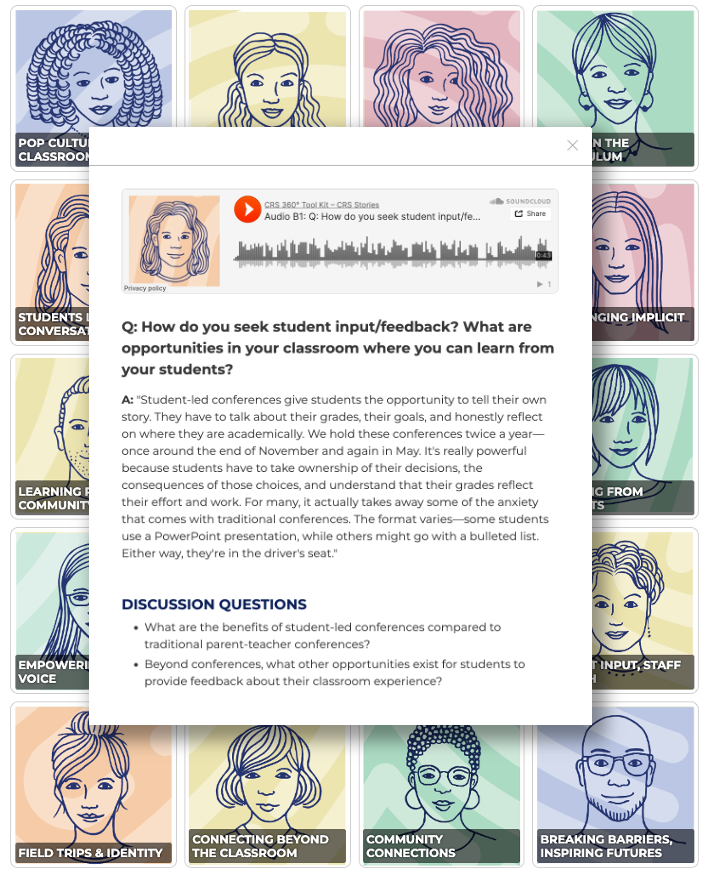
Listen to any of our twenty CRS Stories for yourself at: https://crs360toolkit.org/crs-stories
<!-- Google tag (gtag.js) --> <script async src="https://www.googletagmanager.com/gtag/js?id=G-LSLZJ6ZR5D"></script> <script> window.dataLayer = window.dataLayer || []; function gtag(){dataLayer.push(arguments);} gtag('js', new Date()); gtag('config', 'G-LSLZJ6ZR5D'); </script>