Overview
An award-winning direct mail piece that carries a national Twitter research study out of the browser and into your hands!
The Goal: Give a Twitter research study a life outside the browser
The #CommonCore Project's findings lived on a 100+ page illustrated website, but researchers needed something to hand out at conferences or mail to policymakers, journalists, and education leaders. They needed a physical piece that could stand alone, summarize the study in minutes, and provide an interactive experience in tune with the project website.
The Idea: A gate-fold that unfolds like the research itself.
The brochure opens the same way the study builds: fold by fold, one "Act" at a time. The cover carries the site's explorer-and-bluebird illustration over a bold yellow ground. Inside, five compact panels mirror the website's five research “Acts” — Giant Network, Central Actors, Key Events, Lexical Tendencies, and Tweet Machine — each paired with its own small illustration.
Our signature "decoding" move is on the cover itself: die-cut and printed to hide study findings beneath the surface art, visible only when viewed through the attached 3D glasses. The reader can detach the glasses and be rewarded for interacting with the brochure—rather than skimming the copy and setting it down — the same instinct that made the “Tweet Machine” section of the website playful.
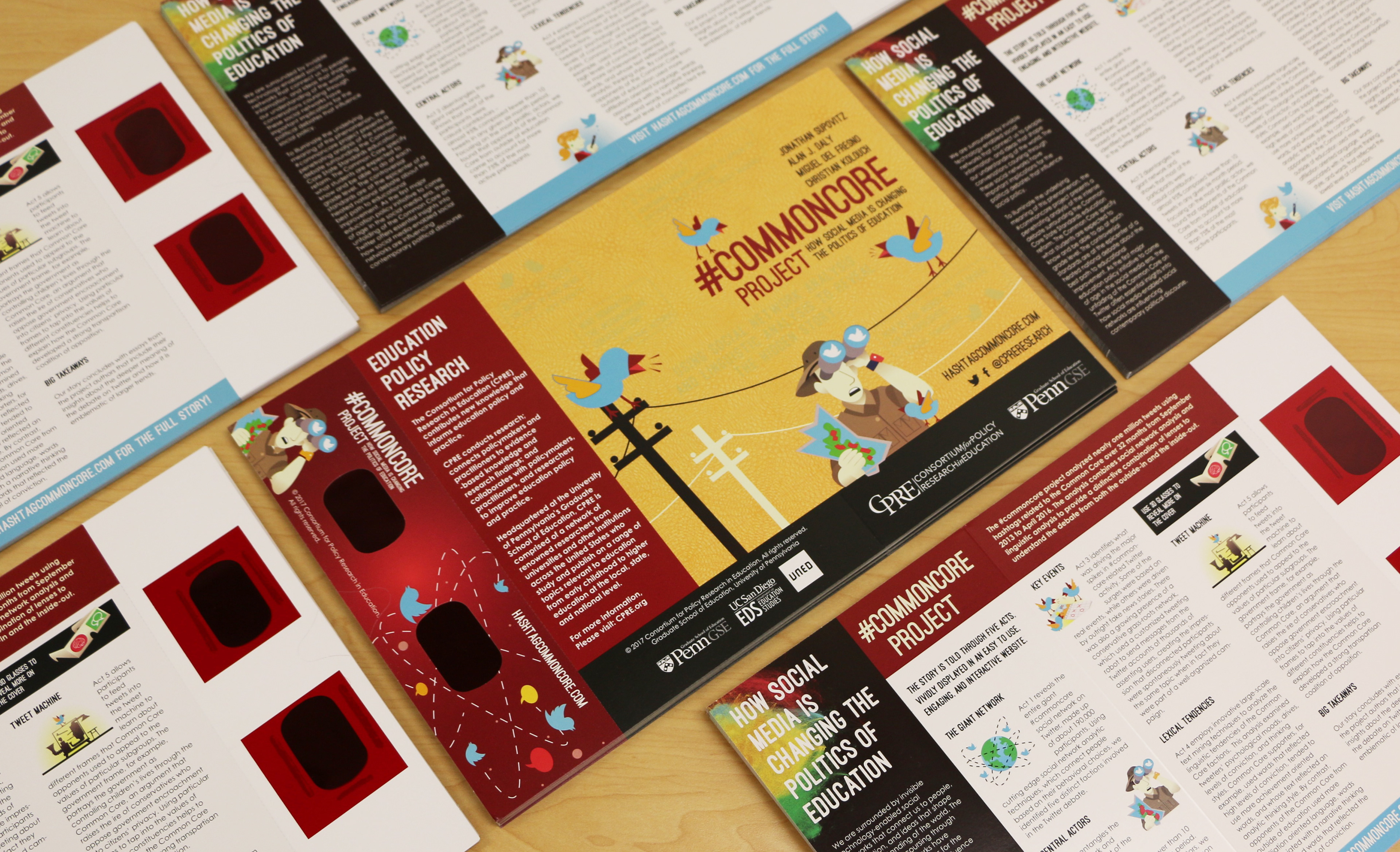
The full piece, unfolded.
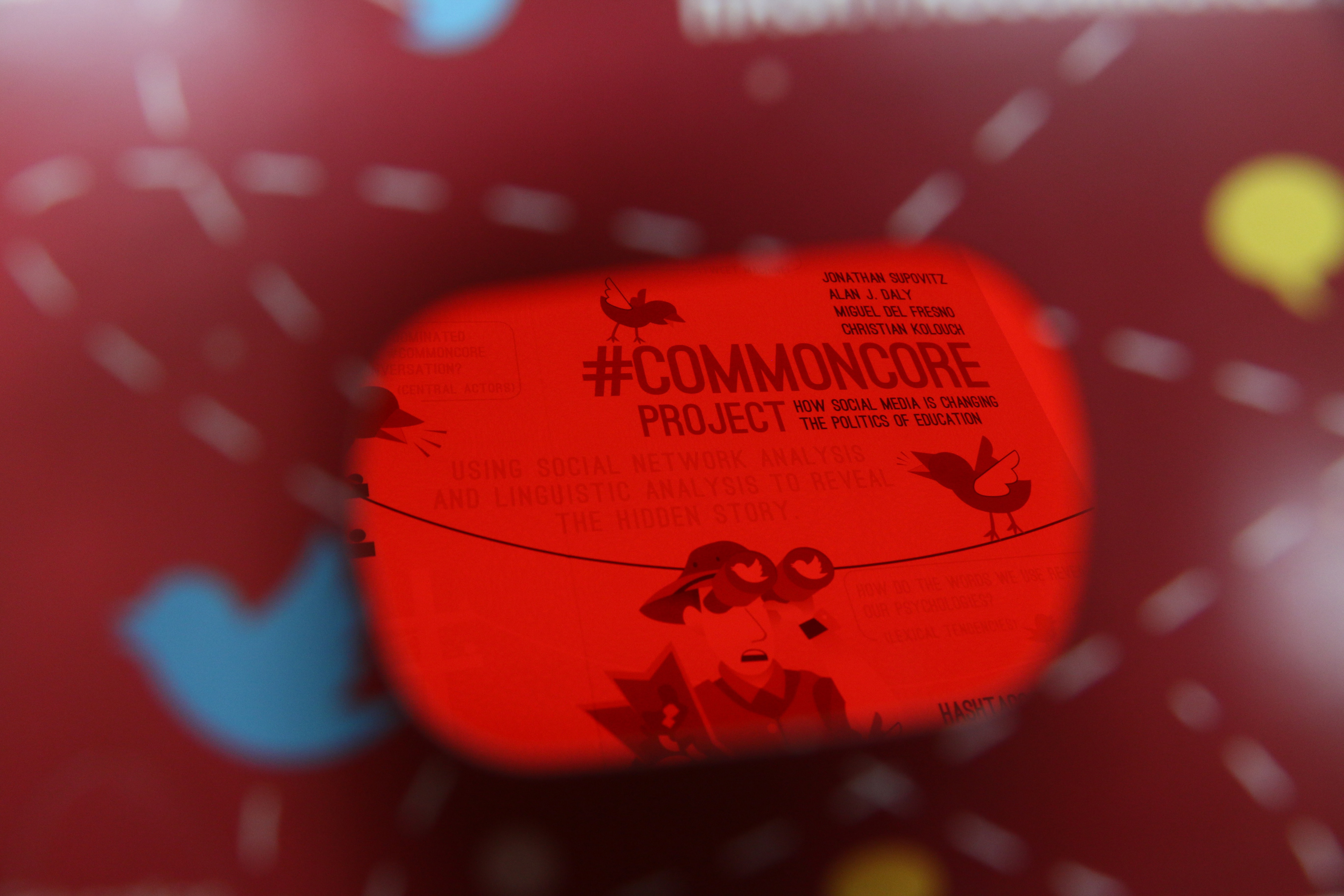
The reveal, seen through the red lens: a hidden layer of the cover art surfaces beneath the printed illustration.
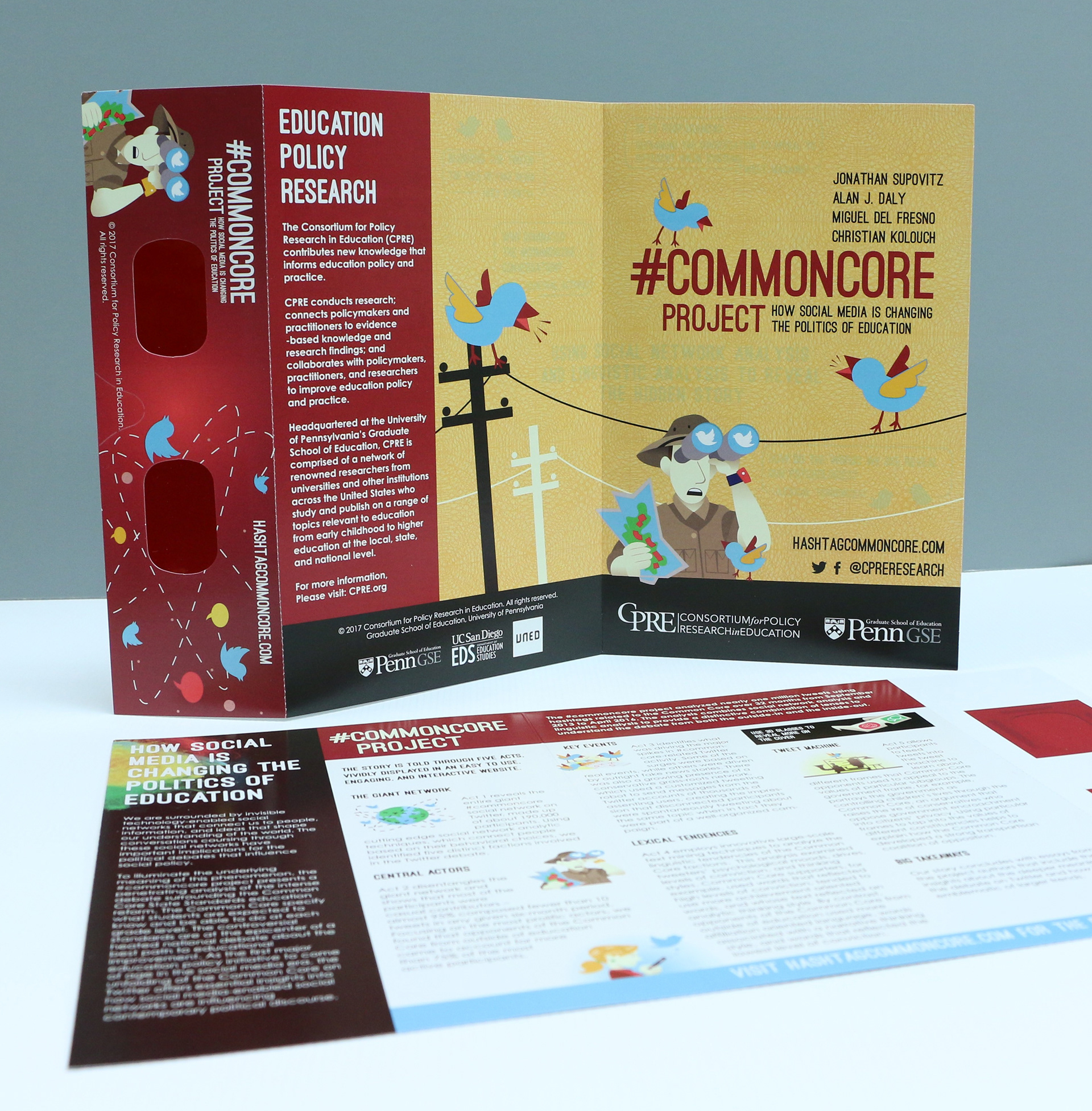
GD USA | 2017 American InHouse Design Award
Over 5,000 submissions were reviewed for consideration in the national design competition. Of 750 awards nation-wide, Consortium for Policy Research in Education (Graduate School of Education, University of Pennsylvania) is recognized for its dissemination and promotional mailer that utilizes 3D technology to reveal key findings from study #commoncore Project.
<!-- Google tag (gtag.js) --> <script async src="https://www.googletagmanager.com/gtag/js?id=G-LSLZJ6ZR5D"></script> <script> window.dataLayer = window.dataLayer || []; function gtag(){dataLayer.push(arguments);} gtag('js', new Date()); gtag('config', 'G-LSLZJ6ZR5D'); </script>